
EASA Cabin Crew Attestation: Training, Exam and Validity
The cabin crew attestation is the personal qualification that EU rules require before someone can work as cabin crew in commercial air transport. This guide follows Part-CC and Part-MED as consolidated by EASA in October 2026. Application procedures and approved providers differ by state.
· by Michal Zembol
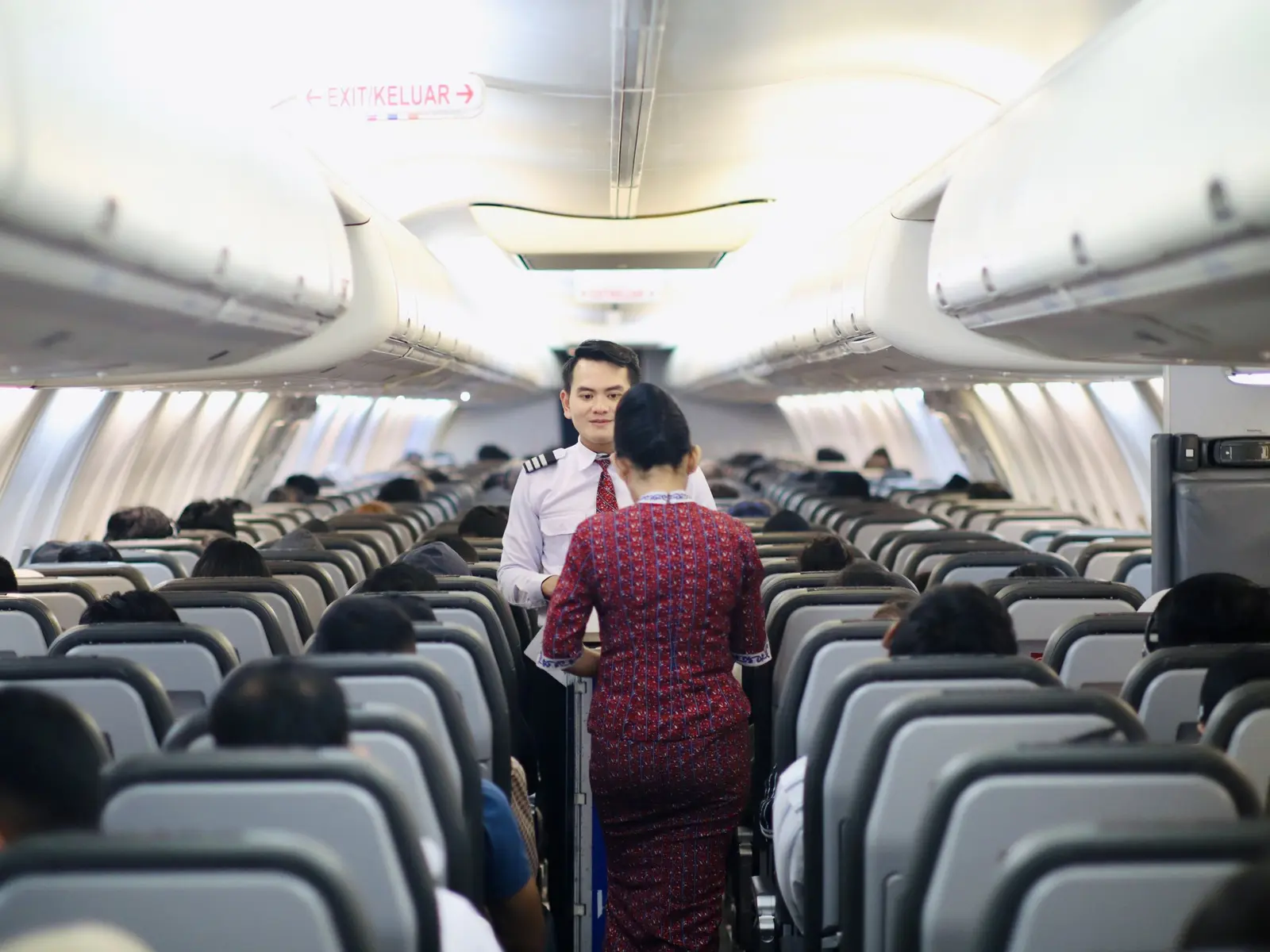
What the attestation is
Part-CC is Annex V to Commission Regulation (EU) No 1178/2011, the Aircrew Regulation. It sets the rules for issuing a cabin crew attestation (CCA) and for keeping it valid. Under CC.GEN.025, the attestation allows its holder to act as a cabin crew member in commercial air transport. The regulation defines a cabin crew member as a qualified crew member, other than flight or technical crew, whom an operator assigns to safety duties for passengers and the flight.
EASA's cabin crew FAQ says an attestation issued in one EU or EASA Member State is recognised in all EU Member States without further requirements, under Article 67 of Regulation (EU) 2018/1139. The same FAQ says a cabin crew document issued outside the EU and EASA Member States is not recognised.
Who can apply
Applicants must be at least 18 (CC.GEN.020). The competent authority is the one designated by the Member State where you apply, and it decides the form and manner of the application (CC.GEN.001 and CC.GEN.015). An attestation is only issued to someone who has completed the initial training course and passed its examination (CC.CCA.100).
What the initial training course covers
Under CC.TRA.215, the training must be given by a training organisation or a commercial air transport operator approved for it by the competent authority, following a documented programme. CC.TRA.220 says the course must include both theory and practical training, and Appendix 1 to Part-CC lists the minimum content:
- general aviation knowledge and the rules that apply to cabin crew, including flight and duty time limits;
- communication between cabin crew and flight crew;
- an introductory course on human factors and crew resource management (CRM), run by at least one cabin crew CRM instructor;
- passenger handling and cabin surveillance;
- aero-medical aspects and first aid;
- dangerous goods and aviation security;
- fire and smoke training, including practical fire-fighting and the use of smoke protection equipment;
- survival training, including putting on and using flotation equipment in water and using slide-rafts or similar equipment.
EASA's FAQ explains that this course is generic rather than tied to one airline. That is why the raft and water practice is required even if a future employer's aircraft carry no rafts.
The examination
After the course, applicants take an examination covering every element of the programme except CRM (CC.TRA.220). Guidance quoted in EASA's FAQ (AMC1 ARA.CC.200(b)(2)) says the person who delivered a piece of training should not also examine it, unless the organisation has procedures to manage that conflict of interest. The FAQ adds that EU rules do not define the qualifications of cabin crew instructors and examiners, which are left to each Member State.
Who issues the attestation
CC.CCA.100 allows the competent authority, an organisation it has approved, or both to issue attestations. Part-ARA requires the authority to use a standard format and to publish which bodies issue attestations in its territory, with a list of any approved organisations (ARA.CC.100).
One state as an example: the Czech Civil Aviation Authority (ÚCL) names Czech Aviation Training Centre, s.r.o. (approval CZ/ATO-004) on its cabin crew page (dated 13 December 2022) as the organisation approved both to run the initial course and to issue attestations. ÚCL's directive CAA-SL-054 says that in the Czech Republic attestations are issued only by approved organisations, and that the document must be printed in English. Check the current list with your own authority.
How long it stays valid
CC.CCA.105 issues the attestation for an unlimited period. It stops being valid if the authority suspends or revokes it, or if the holder has not used its privileges on at least one aircraft type during the previous 60 months. Part-ARA lists cases where authorities must act, including falsified documents, working while affected by alcohol or drugs, and fraudulent use (ARA.CC.105). A holder whose attestation is suspended or revoked must be told in writing, with the right of appeal under national law, must stop using it and must inform the operators they work for (CC.CCA.110).
The cabin crew medical is separate
Cabin crew also have to meet Part-MED, which is not the same as the pilot Class 1 medical. Under MED.C.005, a cabin crew member needs an aero-medical assessment before first being assigned to duties on an aircraft, and then at intervals of no more than 60 months. The guidance says each competent authority sets the actual interval. The assessment can be done by an aero-medical examiner (AME), an aero-medical centre (AeMC), or an occupational health medical practitioner where the rules allow.
Afterwards you receive a cabin crew medical report showing the date, whether you were assessed fit or unfit, when the next assessment is due, and any limitations (MED.C.030). You must give that information, or a copy of the report, to the operators that employ you. EASA's FAQ says a cabin crew member assessed as unfit has the right to a secondary review.
Airline training comes on top
An attestation does not qualify you for a specific aircraft. Under CC.TRA.225, holders may only operate on an aircraft type for which they are qualified under Part-ORO in the Air Operations Regulation, (EU) No 965/2012. That covers aircraft type specific and operator conversion training, differences training and recurrent training. Anyone who has not flown on a type in the last six months needs refresher training and checking first.
Language rules are also set by the operator. EASA's FAQ says there is no EU requirement for cabin crew to speak English, and that each operator decides which languages its crew need.
Holding an attestation is not a job offer. Airlines recruit and select their own cabin crew. For related guides, see the cabin crew section. For the legal text, use EASA's Easy Access Rules for Aircrew.